
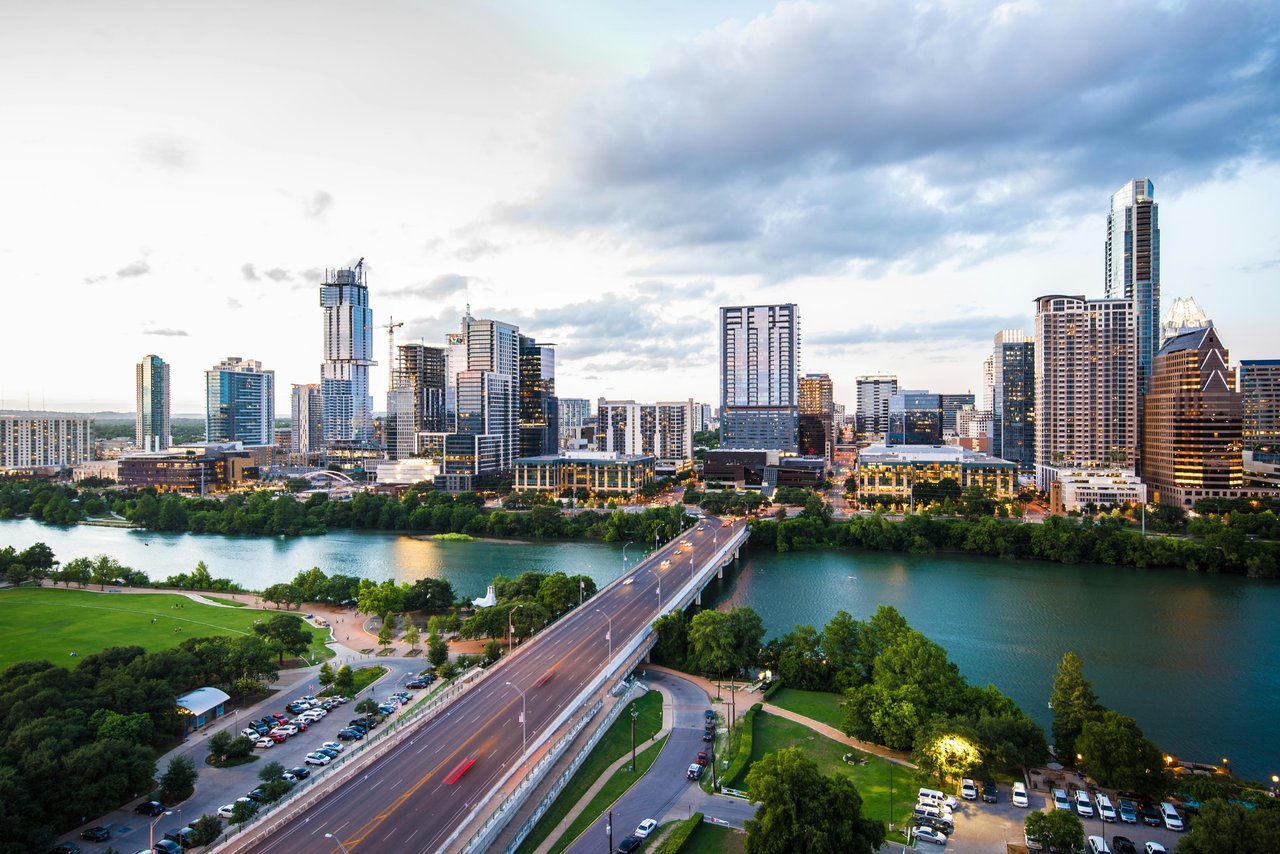
When buying a home in Austin, your child’s private school commute is an important factor to consider. A home may seem close to school on Google Maps, but the actual drive can take longer because of morning traffic, drop-off queues, and strict arrival times. Some private schools also have different entrances, pickup procedures, and schedules depending on the grade.
Before buying a home, consider these factors to make your child's daily school commute easier:
School timings: Check the school's drop-off and pickup times.
Transportation options: See if the school offers bus or shuttle services.
Traffic conditions: Consider how busy the roads get during school hours.
Actual travel time: Try driving the route during school hours to get a better idea of the travel time, including the drop-off line.
Do Austin Private Schools Provide Transportation?
Sometimes, each school sets its own terms. In the Austin metro, published private-school transport takes several different shapes:
St. Dominic Savio: operates buses only where there is sufficient interest. Stop locations and pickup times go to registered users during the summer, and buses depart at about 4:00 p.m., or 1:00 p.m. on early-dismissal days.
Headwaters: Publishes an afternoon shuttle between its Creek and River campuses for eligible grades. Enrollment is required, capacity is limited, and route details are issued each year.
Austin International School: Publishes vehicle drop-off and pickup procedures instead: one-way campus flow, a designated entrance and exit, and an app that notifies the school when a parent is close to campus.
This has two consequences for a purchase:
A transport page on the school's website does not establish service to a particular address. The school’s transport office must provide written confirmation of eligibility, stop, times, and operating year.
When pricing a property, do not pay more for an address because of a conditional or unpublished route. Until a stop is confirmed in writing, evaluate the address assuming a vehicle reaches the campus every school morning.
Eligibility for a public district's bus route does not grant a right to private-school transport, so district route maps are not a guide.
Why Do Published School Hours Understate the Trip?
A published window is an operating rule, not a measured queue. The time a vehicle joins the queue and the time it clears campus are different numbers, and only the first can be researched from a desk.
Arrival rules are also tighter than a published start time suggests, and they vary by division within one school:
Austin International School's 2026–27 schedule sets arrival from 7:55 to 8:15 a.m. for Maternelle and elementary and 7:55 to 8:10 a.m. for middle school, marking later arrivals tardy with no grace period, and Wednesday dismissal is an hour earlier than the rest of the week.
Savio rings a warning bell at 8:10 a.m. and starts the first block at 8:15.
St. Andrew's publishes different timings for its middle and upper divisions.
So the number to model is the hard cutoff for your child’s division, not a rounded 8 a.m., and Wednesday needs its own afternoon model. Because of one-way traffic inside campus and app-based pickup, a mapping app's estimate ends at the street entrance, before the campus process starts. Queue duration has to be timed on site.
Which Campus Is the Actual Destination?
The destination is the division's vehicle entrance, which is not necessarily the school's postal address:
Austin International School lists Maternelle at 12223 Casady Drive, while elementary and middle school are at 4001 Adelphi Lane.
St. Andrew's places its lower and middle divisions at 1112 West 31st Street and its upper school at 5901 Southwest Parkway.
Headwaters connects its Creek campus at 9607 Brodie Lane with its River campus at 801 Rio Grande Street.
Entering a school name as a single destination will produce the wrong answer for at least one division at each of them.
Planning for Two Campuses
Where one vehicle serves two campuses, the morning is a sequence rather than two independent trips:
Home departure → campus A queue → campus A exit → campus B queue → campus B release.
Whether that sequence fits depends on:
The earliest hard cutoff
The queue at the first campus
The exit direction the first campus imposes
The travel time from that exit to the second entrance
The second campus's tardy rule
Whether a shuttle removes only the afternoon leg, or the morning leg too
Two trips that each look short on their own do not establish that the sequence fits, which is what the sequence above is for.
How Far Do Private and District Calendars Diverge?
They diverge far enough to generate trips on days a district calendar shows as ordinary, and private schools also differ from one another. Under its 2026–27 calendar, Austin International School (AIS). For 2026–27, Austin International School begins classes on August 18 and ends with a half day on June 2, while Savio begins August 12 and ends May 27. Thanksgiving (November 23 to 27) and the first spring-break week (March 15 to 19) align between them; almost nothing else does:
AIS takes a half day on October 8, has no classes on October 9, and has a fall break from October 12 to 16.
Savio has no classes September 25, a holiday October 9, an in-service day October 12 and a conference and PSAT day October 16. Then comes Holy Thursday (March 25) and an Easter holiday on March 26.
Those Savio holidays fall inside AIS's second spring-break week, a seasonal camp from March 22 to 26.
The days that matter are the private-school-only half days, conference days, exam periods, early Wednesdays, preseason athletics and religious holidays, each of which can add a trip between home and campus during working hours.
When you need to coordinate a second school schedule, use that district’s final calendar, not a general Austin-area one. Austin ISD, Round Rock ISD, Leander ISD, Dripping Springs ISD and Hays CISD are not interchangeable, and a preliminary calendar should not inform a closing decision. Their attendance boundaries and price bands differ as much as their calendars do, so confirm the district attached to an address on its own terms.
What Do After-School Activities Add?
Savio shows how activities add trips to places that never appear on the school route:
It dismisses at 3:35 p.m., buses leave around 4:00, and the building stays open for supervised activities after that.
Its handbook says it seeks to provide transport to away practices and contests but identifies sports, including swimming, golf, tennis and track, where school transport may be unavailable. A parent may need to drive to a venue rather than to campus.
It expects pickup within ten minutes of athletic dismissal, so practices that end at different times raise questions about route reliability.
Service hours add more: 20 hours per academic year for the Class of 2028 onward, with at least ten outside the school community for students other than seniors.
Preseason also moves the start date earlier. St. Andrew's listed upper-school fall athletics beginning August 3, 2026, more than two weeks before the upper school's first day on August 18. So an address can start generating school travel before the academic year opens.
League membership is not a travel measure. For each team, ask the school for:
The specific team's venue list
Its typical weekday start time
The school's transport policy for it
The expected return time
What Do Austin's Congestion Figures Establish, and What Do They Not?
For July to September 2026, the Federal Highway Administration's Urban Congestion Report measured Austin at:
4 hours 8 minutes of congested conditions per day, 33 minutes better than the same quarter in 2025
A Travel Time Index of 1.32, down 0.05
A Planning Time Index of 1.98, down 0.11
Applied to a trip that takes 20 minutes in free-flowing traffic, those indices mean roughly 26 minutes at the average factor and 40 minutes at the planning factor.
These figures provide regional context and say nothing about a specific home, so treat the arithmetic as an illustration only. They combine designated roads across the metropolitan area rather than measuring a home, a school entrance or a queue. TxDOT's performance dashboard puts the distinction plainly: a congestion index of 1.50 means a trip takes 50% longer than normal, and a reliability index of 1.50 means you need 50% extra time to arrive on time dependably.
The practical split is that:
Average travel time screens homes.
Planning travel time matters when an arrival cutoff has no grace period.
An observed school-day run informs the purchase.
None of the three includes the time spent in the campus queue.
Which Construction and Crossings Constrain the Route?
As of November 2026, central I-35 is not a stable route to plan around. Loop 360 is still under construction, and US 183 North changed in early 2026 when its new express lanes opened.
I-35 Capital Express Central
TxDOT's Capital Express Central project covers US 290 East to SH 71 and Ben White Boulevard, including downtown and the Lady Bird Lake bridge. Central construction is expected to last six to eight years. Current constraints include:
Access to the northbound frontage road just north of Riverside Drive has been closed since February 2026 and will remain closed through 2029, and the Lady Bird Lake segment is anticipated to be completed in 2033.
A southbound frontage-road lane between 49th and 46th streets is closed through early 2028.
The southbound frontage road at River Street is closed through mid-2028.
Riverside Drive is being rebuilt as a single-point urban interchange, where one set of signals controls all turns, with phased work continuing from 2028 to 2033.
Loop 360 and US 183
On Loop 360, work between Bold Ruler Way and Pennybacker Bridge has one lane open in each direction during the Westlake Drive and Cedar Street phase. Completion is expected in late 2026, weather permitting.
Two northbound US 183 express lanes between Burnet Road and SH 45 North opened on January 2, 2026. The southbound express lanes and MoPac direct connections followed in early 2026.
A travel-time estimate from before the current construction phase does not reflect current performance, and the route should be rechecked immediately before committing.
Why River Crossings Matter
The Colorado River, Lady Bird Lake and Lake Austin limit north–south routes to a handful of crossings. They include I-35 at Lady Bird Lake, Red Bud Trail below Tom Miller Dam, Loop 360 at Pennybacker Bridge and RM 620 at Mansfield Dam. The real risk is depending on a single crossing. When your main route and your backup route use the same bridge or the same approach interchange, a map shows two routes while the home has one bottleneck.
Jurisdiction needs the same care: the 78746 ZIP code spans three governing entities with different taxes, permitting and services, so check it address by address rather than by ZIP code. Read School-zone restrictions from the posted sign on each approach, not from an assumed metro-wide schedule.
How Do You Test an Address Against a Fixed Arrival Time?
Separate the measurements, and treat each source as its own observation rather than averaging them into one falsely precise number.
For each home you are considering, record four times:
Road time, from the driveway to joining the queue
Queue time, to the release point
Campus-clear time, from release to the public road
The full round trip
Base the decision on a bad-day allowance rather than the fastest observed attempt: road planning time plus observed queue allowance plus campus-clear allowance.
Before You Visit
If you are buying from out of state, most of this groundwork can be done remotely:
Pin the exact driveway and the school's designated vehicle entrance, not a postal address or a subdivision name.
Get the current daily schedule and annual calendar from the school.
Ask for written confirmation of stop eligibility for the exact address.
Check planned-arrival estimates for Tuesday, Wednesday and Thursday separately.
Overlay TxDOT closures.
Identify every crossing and every highway segment shared by your main and backup routes.
Map the two-campus sequence where one applies.
On site
Leave from home on an ordinary school-day Tuesday or Thursday, using the actual driveway direction, because a divided road or a difficult left turn can change the route. Aim for the arrival window, join the queue itself, and keep timing until the car is back on the public road. Then repeat the run at dismissal, and on Wednesday if the schedule differs. For split campuses, drive from the first campus exit straight to the second entrance. Add at least one run in rain or active construction. A single clean run shows that the trip is possible; repeated runs show that it is reliable.
The Three Tests a Home Has to Pass
A workable address passes all three tests, not just the best one:
A home has not passed if it only works at the routing app's fastest estimate. The same is true if it depends on a conditional shuttle, or if campus queue time is treated as zero. That is a different judgment from whether the house suits you, and it is the one that gets discovered late.
Testing the School Run With Local Help
This matters to a purchase because of timing. A relocation timeline with room for test drives on school days lets you check the route before you are committed to a home. If you are weighing commute time against public school ratings across several areas, the comparison of Austin areas for commute and schools sets them side by side. The Westlake corridor is where the crossing question is sharpest.
Kacy Dolce, a Broker Associate with Christie's International Real Estate Lone Star, helps families find homes across West Austin, Westlake, Rollingwood, Barton Creek, Bee Cave, Lakeway, and the Lake Travis area.
With lifelong roots in Central Texas, Kacy understands the local neighborhoods, traffic patterns, and school routes that can affect daily travel. She can help you explore available homes in Austin while considering your family's school commute and daily needs.
Connect with Kacy Dolce to find an Austin home that fits your family's needs and school schedule.
Frequently Asked Questions
Can a routing app tell me whether an address works for a fixed school arrival time?
Not on its own. A routing app predicts road time to a pin at the street entrance for a chosen departure or arrival time. It is a model rather than a promise, and it ends where the campus queue begins. For an arrival cutoff with no grace period, rely on a time measured from the driveway until the car is back on the public road, repeated across multiple school days.
Does a school shuttle make a longer drive acceptable?
Partly, because a shuttle may remove one leg of the trip rather than both. Published shuttles in the Austin metro can connect campuses rather than serve homes, and eligibility, capacity, grade limits and route details are set each year. Confirm in writing which legs the service covers, whether it operates on early-dismissal days, and what happens if capacity is reached, before treating it as part of the daily pattern.
How much extra time should I allow for a bad day?
Enough to still arrive before the hard cutoff, which is why you should plan for time,not average time. Austin's regional Planning Time Index has been well above its Travel Time Index, so a trip that averages 20 minutes uncongested can need roughly double that for dependable arrival. Add your observed queue and campus-clear times on top, because regional figures leave both out.
Does I-35 construction matter for an address that avoids the highway?
Yes, it can. Closures push traffic onto the main local roads and frontage roads a local route does use, and your backup route may share a crossing or an approach interchange with your main one. Capital Express Central work through central Austin is expected to continue for years, so recheck the route between contract and closing rather than assuming it stays the same.
This article is informational and is not legal, financial or transportation advice. School schedules, calendars, campus locations and transport arrangements are set by each school and change by academic year; confirm each against the school's current published materials and its transport office. Construction phasing and road conditions change continuously, so verify current conditions with TxDOT before relying on any route.